Hard water and skin: when tightness does not come only from your products

Have you ever travelled somewhere and felt that your products were not working in quite the same way? You pack your usual routine: the same cleanser, the same serum, the same cream. And yet, after a few days, something changes. Your skin starts to feel tighter, less flexible, less comfortable, almost as if your routine had stopped responding overnight.
It is a fairly common feeling. We often blame the weather first, or the flight, tiredness or a change in schedule. But before assuming it is only your products, it is worth looking at the tap too. Sometimes, the most invisible factor is the one that touches your skin every single day: water.
Skin does not only respond to what we apply after cleansing. It also responds to temperature, friction, contact time and the type of water we use to wash our face. That is why talking about hard water and skin makes sense when the question is not “what is wrong with the water?”, but “what kind of water is touching my skin, and why does my routine suddenly feel different?”
What we mean by hard water
Hard water is water with a higher concentration of minerals, mainly calcium and magnesium. In many areas, it is easy to recognise because of the white limescale deposits it leaves on taps, showers or glass. But that same water is also part of a much more everyday gesture: cleansing the face, hair and body.
According to the OCU, water hardness varies depending on the area and is mainly linked to these mineral salts. This does not mean that hard water and skin are always a problem. Not every skin notices it in the same way, and it does not always have to cause discomfort. But in dry, sensitive, reactive skin, or when the skin barrier is already compromised, it can be one more factor to take into account.
The difference is usually felt after washing, not necessarily during. Some common signs include:
- The corset effect: skin feels uncomfortably tight just after rinsing the face.
- The film effect: a feeling of residue, or skin that does not quite feel clean.
- Roughness to the touch: less softness and more uneven texture.
- Urgent hydration: needing to apply cream sooner than usual.
- Skin that changes when you travel: more discomfort in certain cities, homes or destinations.
The important thing is not to turn hard water and skin into a single-cause explanation. The final feeling depends on the sum of many things: water, cleanser, temperature, time, friction and the previous condition of the skin barrier.
Why your skin can notice it even if your routine has not changed
Skin has its own balance. Its surface maintains a slightly acidic pH and a skin barrier that helps limit water loss. At Twelve Beauty, we have already talked about this in our guide to skin pH: when that balance is disrupted, skin can feel drier, tighter, more sensitive or more reactive.
That is why hard water and skin are better understood as a matter of context. Hard water does not act alone, but it can add to other habits that reduce comfort: showers that are too hot, cleansing for too long, cleansers that leave the skin feeling “too clean”, towels that drag instead of patting, intensive actives when the skin is already uncomfortable, or changes in climate, travel, pool, beach and air conditioning.
In those moments, cleansing can stop feeling like a comforting step and become something less pleasant: tight skin, a cardboard-like sensation, lack of flexibility or an immediate need for cream. Sensitive skin tends to notice these small imbalances sooner because it has less margin for tolerance.
So the useful question is not whether hard water and skin are “good” or “bad”, but whether your skin feels comfortable after being exposed to it.
If the feeling appears right after washing your face, improves with hydration and becomes more noticeable in certain homes, cities or trips, water may be playing a role. There is no need to dramatise it; it is enough to adjust cleansing and support the skin afterwards.
Pool, sea and summer: when water changes context
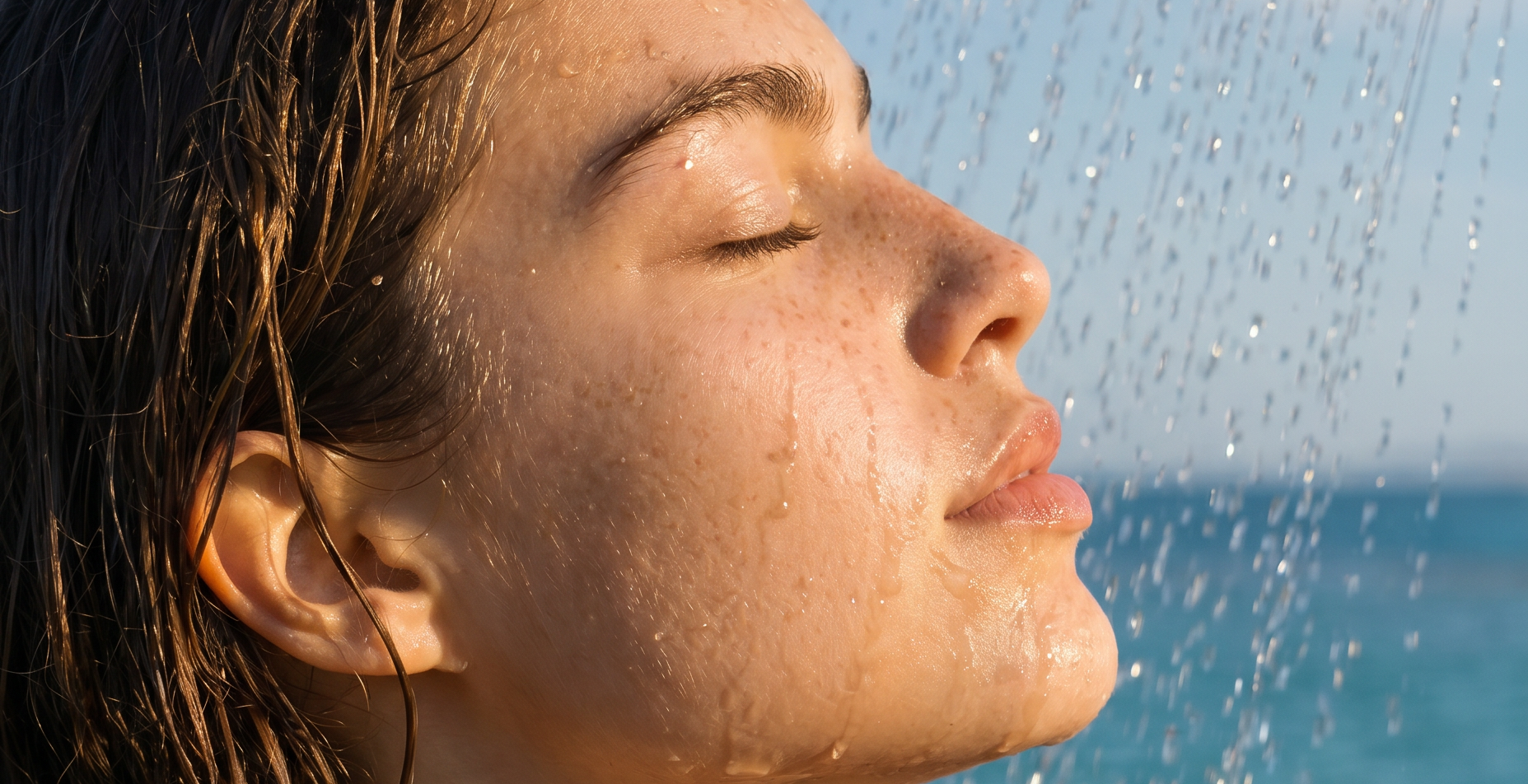
In summer, the topic becomes broader. We are no longer talking only about tap water at home, but also about more showers, swimming pools, seawater, sweat, sun, wind and changes in routine. The same skin can feel different because the aquatic context changes too.
In pools, water is maintained with disinfection systems and pH control. For sensitive skin, some guides recommend rinsing the skin after swimming and reapplying hydration to compensate for possible dryness. The American Academy of Dermatology also highlights, for dry skin, the importance of using lukewarm water, avoiding friction and applying moisturiser while the skin is still slightly damp.
With the sea, something similar happens, but not in exactly the same way. Salt can leave a feeling of residue or tightness as it dries on the skin, especially when there is already sun, wind or a more vulnerable barrier. Still, the sea should not be presented as something negative by default: some skins tolerate it well, while others feel more comfortable after a gentle rinse and more generous hydration.
At this point, hard water and skin become part of a broader idea: not all water feels the same. Tap water, pool water and seawater can leave different sensations, and the most intelligent response is not to change everything, but to read the skin more carefully.
How to adjust cleansing when water is not helping
If hard water and skin become a recurring suspicion, it is best to start with the simplest things. You do not always need to change your whole routine; very often, it is enough to adjust how you cleanse and how you support the skin after contact with water.
When you suspect that hard water may be influencing tightness, the solution does not have to be radical. Before replacing products that usually work well for you, review the basic gestures. Relief often comes from small decisions repeated consistently.
Try this:
- Use lukewarm water, not hot water.
- Reduce contact time.
- Choose gentle cleansers, especially if your skin is already reactive.
- Avoid the “squeaky clean” feeling. Clean skin should not feel stripped.
- Pat dry, without rubbing.
- Apply hydration while the skin still holds a little moisture.
- Simplify for a few days if tightness persists.
After cleansing, you can look for formulas that support the return to comfort. Dara’s Water can work as a gentle cleansing step when you are looking for a delicate option, especially if the skin feels uncomfortable after contact with water.
If the skin feels dehydrated or less flexible, you can rely on the duality of Ideal Moisture Level Serum and Ideal Rebalancing Level Serum: both are designed to hydrate, but from different skin needs. One better supports skin with a greater tendency to dryness, while the other is more suited to oilier or more imbalanced skin. They can also be combined depending on how the skin feels at any given moment.
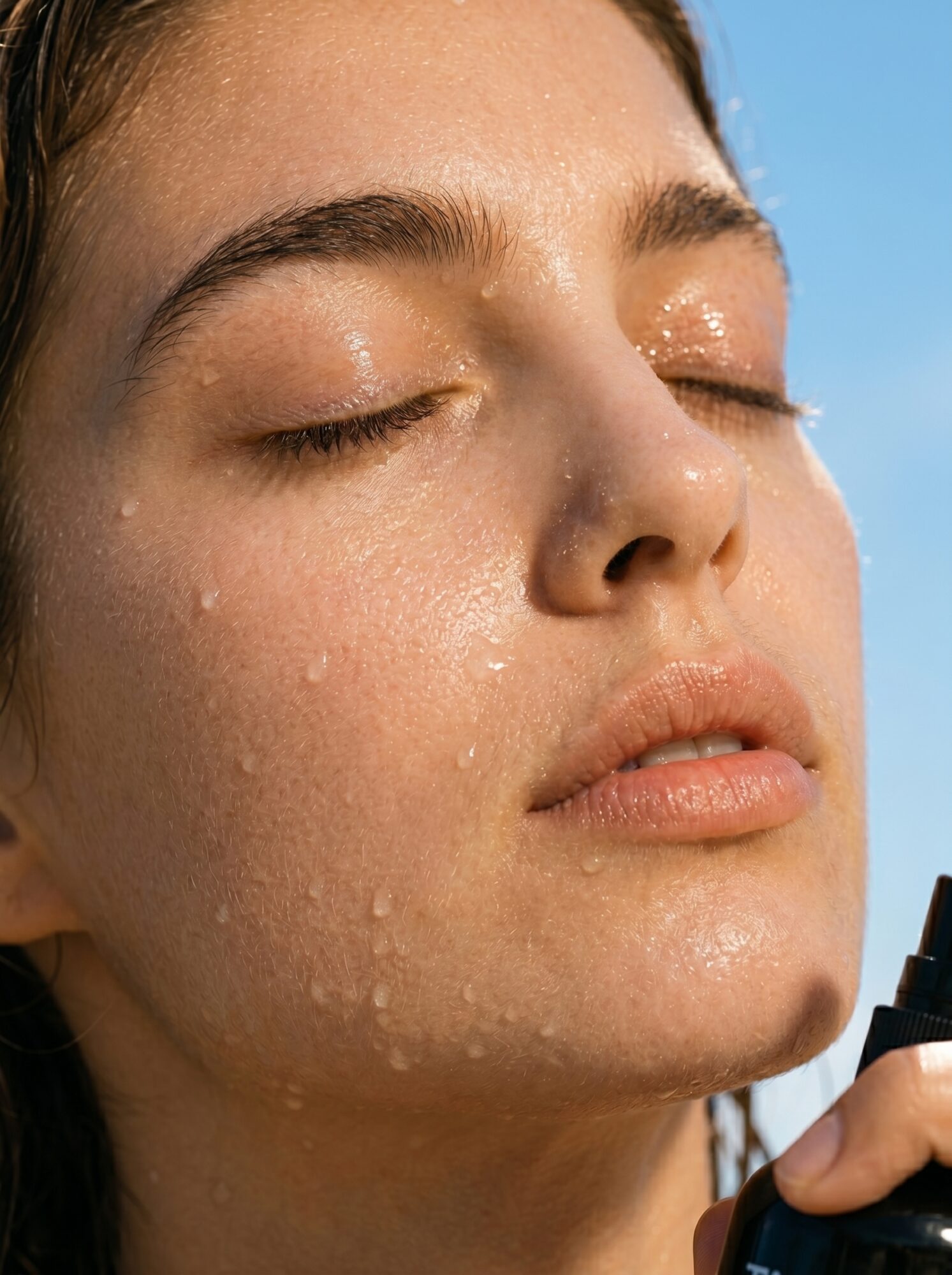
And if you notice that cardboard-like or “corset” feeling after washing your face, Ultra Revitalising Elixir can be a very useful gesture just after patting the skin dry. It brings freshness, light hydration and a feeling of comfort in a versatile format that can be used as a toner or reapplied during the day as a mist whenever the skin asks for an extra moment of calm.
Its lightweight texture helps the routine feel more comfortable, fresher and easier to maintain in summer, both at home and while travelling.

What to prioritise if your skin is already sensitised
When we talk about hard water and skin, the skin barrier matters as much as the water itself.
When the skin is sensitised, less often helps. Not because a minimal routine is always better, but because uncomfortable skin needs room to recover tolerance. If every cleanse ends in tightness, it is better to pause experimentation and return to a simple structure.
For a few days, prioritise:
- gentle cleansing
- consistent hydration
- comfortable textures
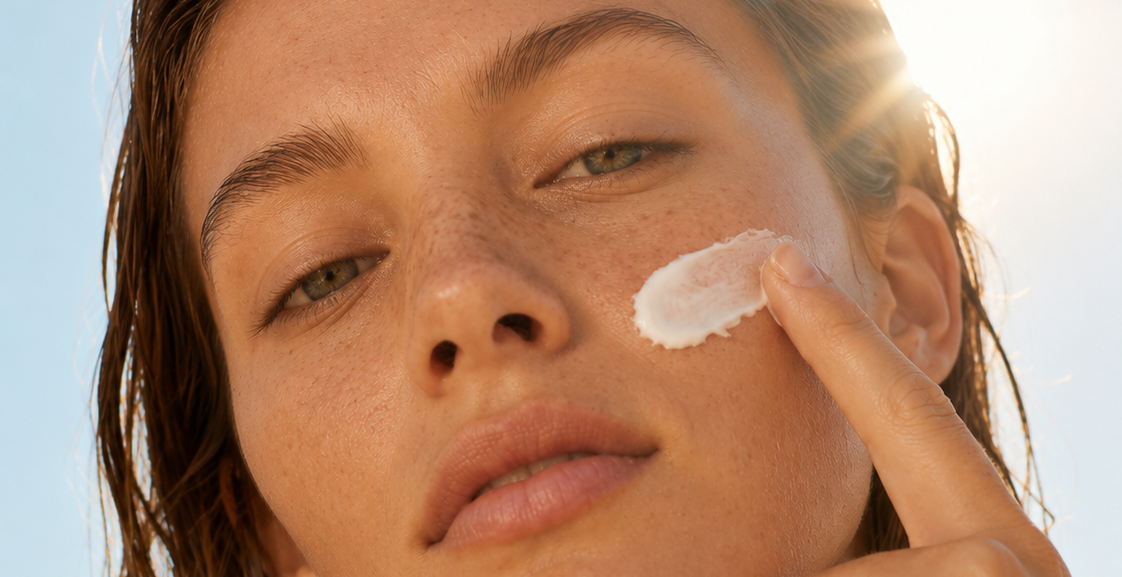
- sunscreen if there is sun exposure
- fewer intensive actives
- less exfoliation
- fewer product changes
Hard water on the skin may feel more noticeable at these times because the barrier is no longer at its best. You may notice it more after travelling, periods of stress, changes in climate, frequent pool swims or sun exposure. That is why, in summer, the goal is not to have the most complex routine, but a routine that can support comfort even when the environment changes.
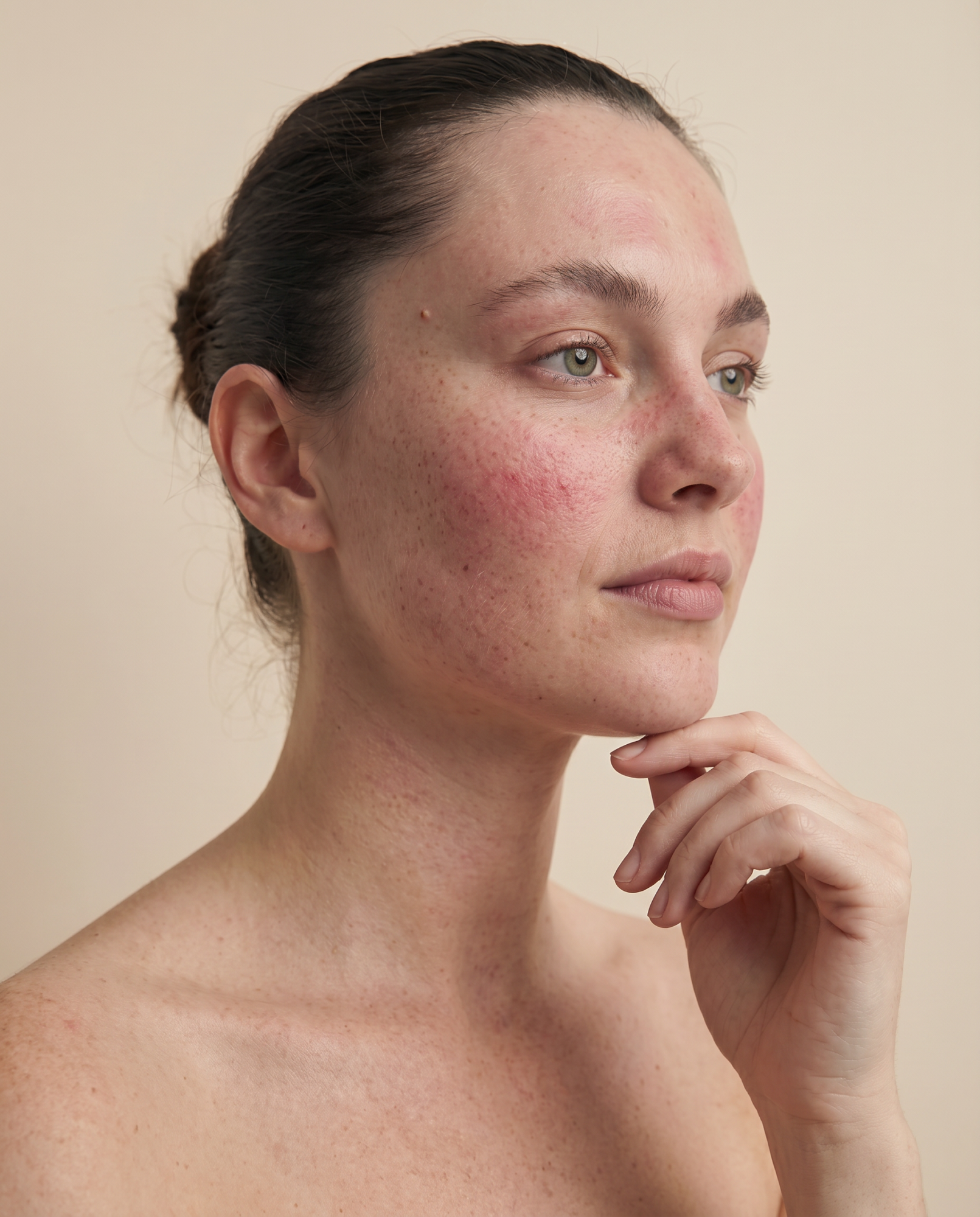
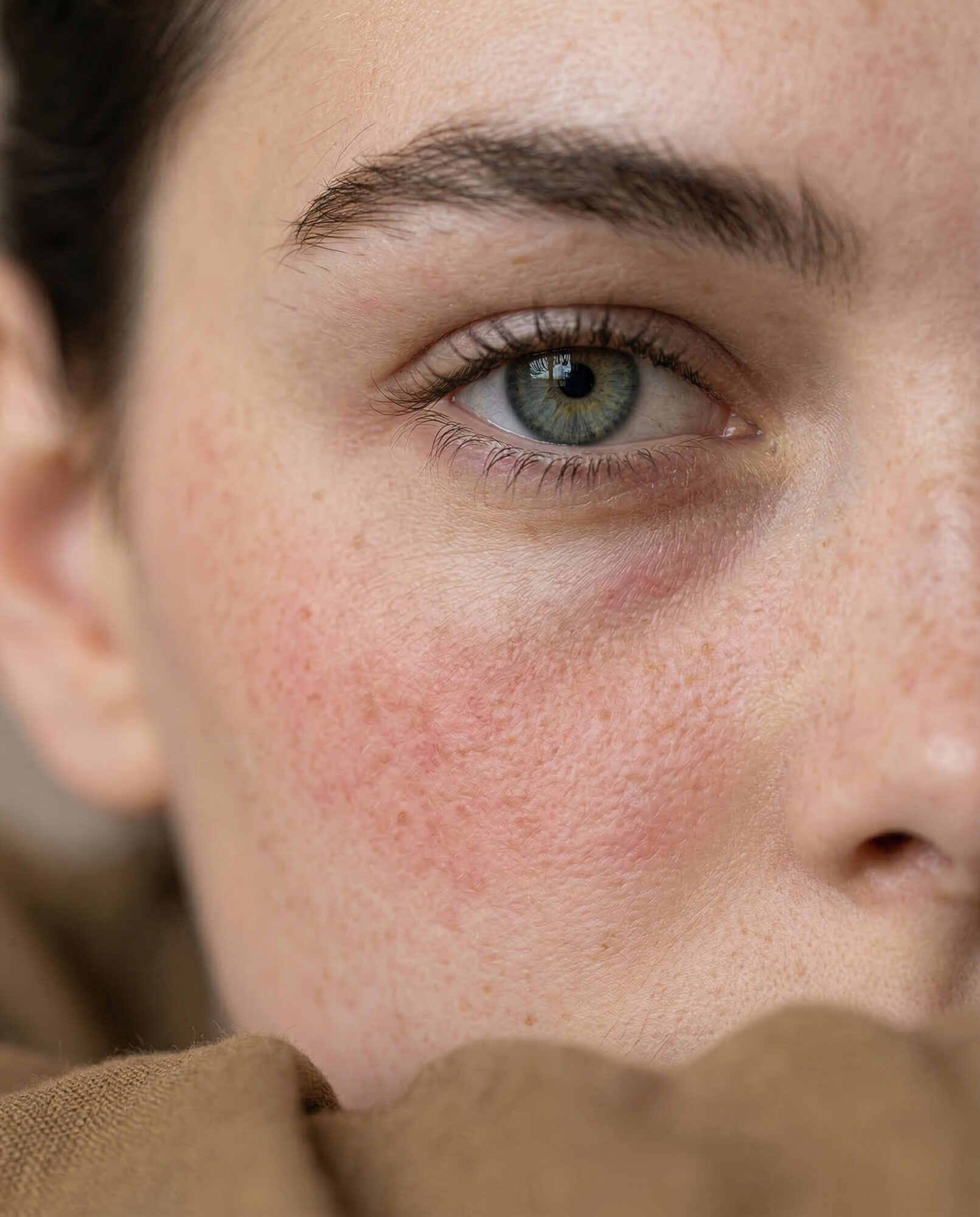
It is also important to know when to look beyond the water. If tightness comes with persistent redness, intense itching, flaking or flare-ups that do not improve, it is worth speaking to a professional. Water may be part of the context, but it is not always the whole explanation.
Caring for the skin does not mean controlling every variable. It means observing better. Sometimes the skin is receiving more stimuli than it can process: hard water, heat, chlorine, salt, sun, sweat, friction. And when that happens, the most sensible response is usually the calmest one: cleanse with respect, hydrate with intention and support the skin barrier when the environment changes.
Frequently asked questions about hard water and skin
Does hard water always dry out the skin?
Not always. Some people do not notice any change, while others feel more tightness, roughness or that “corset effect” after washing, especially if their skin is dry, sensitive or reactive. It is better to talk about a possible loss of comfort rather than a universal effect.
How do I know if tightness comes from the water or from my cleanser?
Pay attention to when it appears. If it happens right after washing your face, changes depending on the city, appears during certain trips or improves when you use lukewarm water, less friction and more hydration, water may be part of the context. If it happens all the time, also review your cleanser, how often you use it and the active ingredients in your routine.
Does hard water affect sensitive skin more?
It may be more noticeable on sensitive skin because this type of skin usually has less tolerance for environmental changes. That does not mean water is the only cause, but it can add to heat, chlorine, salt, over-cleansing or a compromised barrier.
Do I need a filter if I live in an area with hard water?
Not necessarily. It may be an option for some homes, but it should not be the first cosmetic response. Before that, review the basics: lukewarm water, a gentle cleanser, less friction and hydration after cleansing. For many people, the first step when thinking about hard water and skin is to adjust the routine, not to buy more things.
What should I do after the pool or the beach?
Rinse the skin gently, pat dry without rubbing and apply hydration. If the skin is reactive, avoid adding exfoliants or intensive actives on the same day. The priority is to restore comfort, not to add more steps. In summer, hard water and skin can coexist with chlorine, salt and sun, so simplifying counts too.